Promotion, Seniority and Previous Service in Sindh: A Civil Servants Guide
A practical overview of promotion eligibility, seniority, regular appointment and previous-service claims for Sindh civil servants.
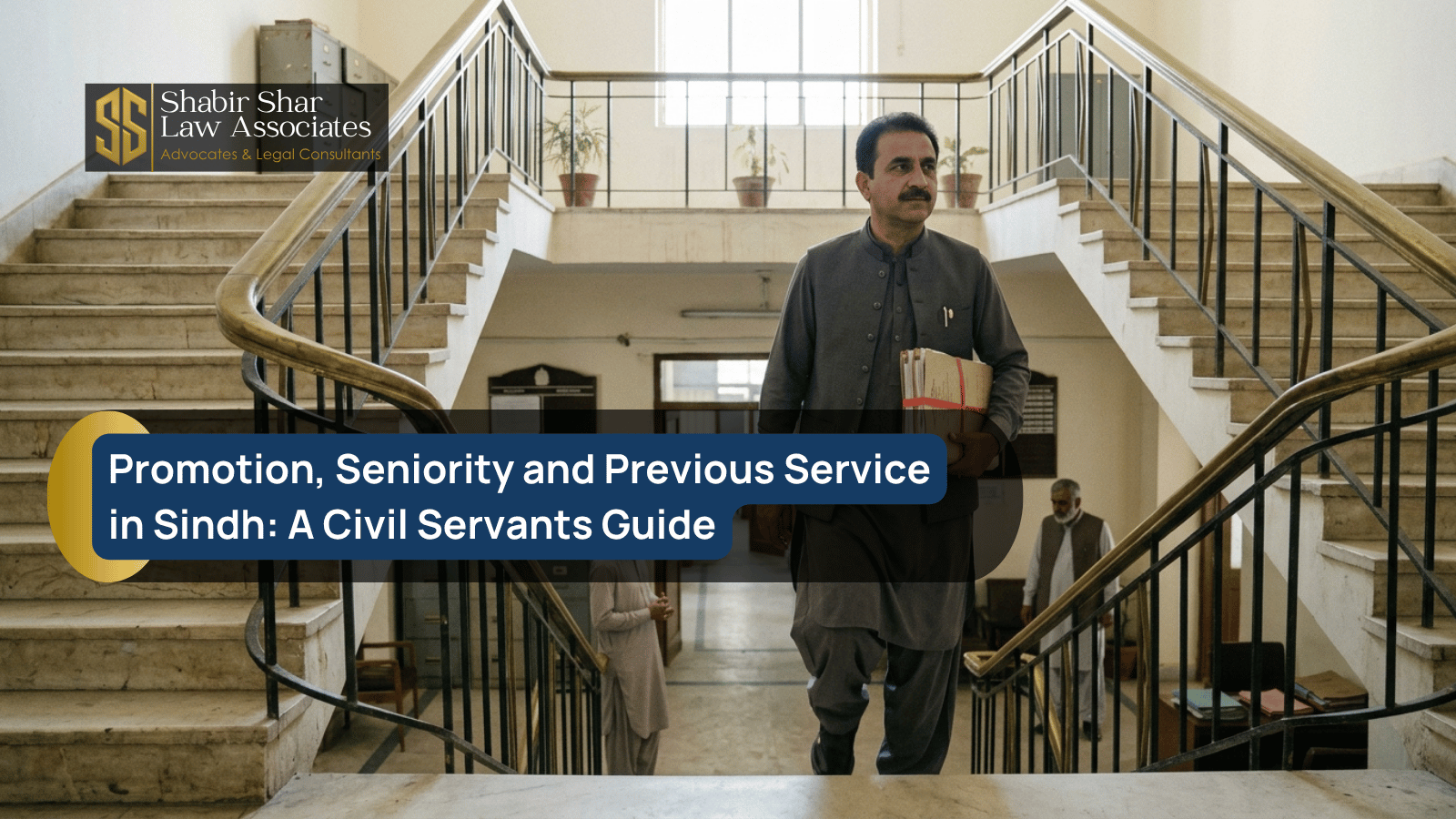
Promotion and Seniority Are Related but Not the Same
Promotion disputes often begin with the statement that an employee is “senior” and therefore should have been promoted. Sindh civil-service law treats seniority and promotion as related but distinct subjects. The applicable service and recruitment rules, the nature of the promotion post, prescribed qualifications and the decision-making process all matter.
Sections 8 and 9 of the Sindh Civil Servants Act, 1973 provide the statutory starting point. Section 8 deals with seniority; section 9 addresses eligibility and the basis of promotion to posts reserved for departmental promotion.
What Section 8 Says About Seniority
The Act requires the appointing authority to cause a seniority list to be prepared for proper administration of a service, cadre or post. It also states that the provision does not itself confer a vested right to a particular seniority position. Seniority is determined under the prescribed framework and in relation to other civil servants in the same service or cadre.
The Act further links seniority after promotion to the date of regular appointment to the promoted post, while preserving inter-se seniority for officers selected for promotion in the same batch in the circumstances stated by the provision.
The Sindh Civil Servants (Probation, Confirmation and Seniority) Rules, 1975 are also important when determining how seniority is actually fixed.
Promotion Can Be Merit-Based or Seniority-Cum-Fitness
Section 9 states that a civil servant possessing the prescribed minimum qualifications may be eligible for promotion to a higher post reserved for departmental promotion. It distinguishes selection posts, where promotion is based on selection on merit, from non-selection posts, where promotion is based on seniority-cum-fitness, subject to the applicable rules.
Eligibility for consideration is therefore not the same as an automatic entitlement to promotion. The relevant rules may govern qualifications, experience, the competent board or committee, record evaluation and other criteria. For certain higher grades, Sindh has specific instruments such as the Sindh Civil Servants Promotion (BPS-18 to BPS-21) Rules, 2022; those rules should not be assumed to govern every lower-grade or special-cadre case.
For a Karachi promotion dispute, see the firm's promotion service.
Why the Applicable Recruitment and Service Rules Matter
The general Act is only part of the analysis. The Sindh Civil Servants (Appointment, Promotion and Transfer) Rules, 1974 and any department-specific recruitment rules may determine the appointing authority, promotion channel and method of selection. Statutory bodies, universities, authorities and corporations may be governed by their own enabling laws and service regulations.
If the dispute comes from unclear, inconsistent or outdated institutional rules, review our formation and review of service rules service.
When Previous Service Becomes a Separate Legal Question
An employee may seek to count earlier service for seniority, pension, pay fixation, promotion eligibility or another benefit. Those are not necessarily the same claim. Previous service may have been rendered in another department, cadre, autonomous body, temporary post, deputation arrangement or different appointment status. The legal consequence depends on the rule governing the specific benefit being claimed.
Do not assume that recognition of earlier service for one purpose automatically counts it for all purposes. The appointment orders, transfer or absorption terms, continuity clauses, pension framework and seniority rules should be reviewed separately.
For this issue, see our inclusion of previous service service and counting of seniority service.
What Can Be Challenged in a Promotion or Seniority Dispute?
The available challenge may concern an incorrect seniority list, failure to apply the governing rules, exclusion from lawful consideration, use of an inapplicable criterion, incorrect treatment of regular appointment, or an error concerning qualifying service. By contrast, the Sindh Service Tribunals Act contains a jurisdictional exclusion for a decision determining fitness for appointment to or promotion to a particular post or grade.
That distinction is why a promotion case should be framed around the actual legal error rather than a general request that a court or tribunal substitute its own assessment of fitness.
Documents to Review
- Initial appointment and confirmation orders.
- Promotion, transfer, absorption or regularization orders.
- Current and previous seniority lists.
- Department-specific recruitment and promotion rules.
- Qualification and service-record documents relevant to eligibility.
- Orders dealing with earlier service, pay, pension or continuity.
- Any departmental representation or appeal already filed.
Frequently Asked Questions
Does being senior automatically guarantee promotion?
No. Promotion depends on the applicable statutory and service rules, the type of post, eligibility and the prescribed merit or seniority-cum-fitness framework.
Can a seniority list be challenged?
A seniority dispute may be reviewable where the applicable rules have been misapplied, but the legal basis, forum and limitation depend on the employee's service framework and the order involved.
Does previous service always count toward seniority?
No. Earlier service must be tested against the rule governing the particular benefit claimed. Counting for pension, pay, promotion eligibility and seniority can involve different legal questions.
Do the 2022 Sindh promotion rules apply to every government employee?
No. The 2022 rules identified here apply to promotions to specified BPS-18 to BPS-21 posts covered by those rules. Other grades, cadres or organizations may have different instruments.
What should I do if promotion and seniority issues overlap?
Build a chronology of appointment, regularization, seniority and promotion events, identify the rule governing each stage, and determine whether the real dispute concerns eligibility, ranking, procedure, previous service or a fitness assessment.
This guide is written for general information and reviewed against the legal framework identified in the article. Laws, procedures and facts can change; confirm the current position before relying on information for a live matter.

Muhammad Saleem
Founder, Made by Saleem | Web Systems, SEO & Digital Growth SpecialistMuhammad Saleem is the founder of Made by Saleem and a web systems, SEO and digital growth specialist with 7+ years of practical experience. His work spans custom websites, Laravel and Filament platforms, CRM and client portals, ecommerce, business automation, SEO and digital marketing, with 50+ projects managed across multiple industries.
View author profile