Criminal Trial in Pakistan: From FIR and Charge to Judgment
A practical step-by-step guide to criminal trial procedure in Pakistan, including investigation, charge, evidence, defence, judgment and fair-trial safeguards.
How a Criminal Case Moves from FIR to Judgment in Pakistan
A criminal trial is not one event. It is a sequence that can begin with an FIR or another lawful initiation of proceedings, move through investigation and court process, and ultimately lead to a judicial decision. The Code of Criminal Procedure, 1898 provides much of the procedural framework, while the Constitution protects the right to fair trial and due process.
Article 10A of the Constitution states the right to fair trial and due process in the determination of civil rights and obligations or a criminal charge. The official constitutional text is available through Pakistan Code.
Stage 1: FIR and Investigation
For information relating to a cognizable offence, section 154 CrPC deals with recording the information by the officer in charge of a police station. Once a criminal case is registered, investigation may involve witness statements, recovery or inspection of relevant material, medical or forensic evidence where applicable and other lawful investigative steps.
Registration of an FIR is not a finding of guilt. It initiates the criminal process and provides the basis for investigation. If the issue is refusal to register information concerning a cognizable case, read our separate guide on FIR registration and section 22-A remedies.
Stage 2: Police Report and the Competent Court
After investigation, the investigating agency submits the report required by the applicable procedure. The competent court then deals with the steps necessary for the matter before it. Jurisdiction depends on the offence and law involved; not every criminal case is tried by the same court, and special statutes can create different forums or procedures.
At this stage, custody and bail may remain important. Our pre-arrest and post-arrest bail guide explains the distinction between the main bail stages, while our criminal trial service in Karachi describes the firm's representation offering.
Stage 3: Charge and the Prosecution Case
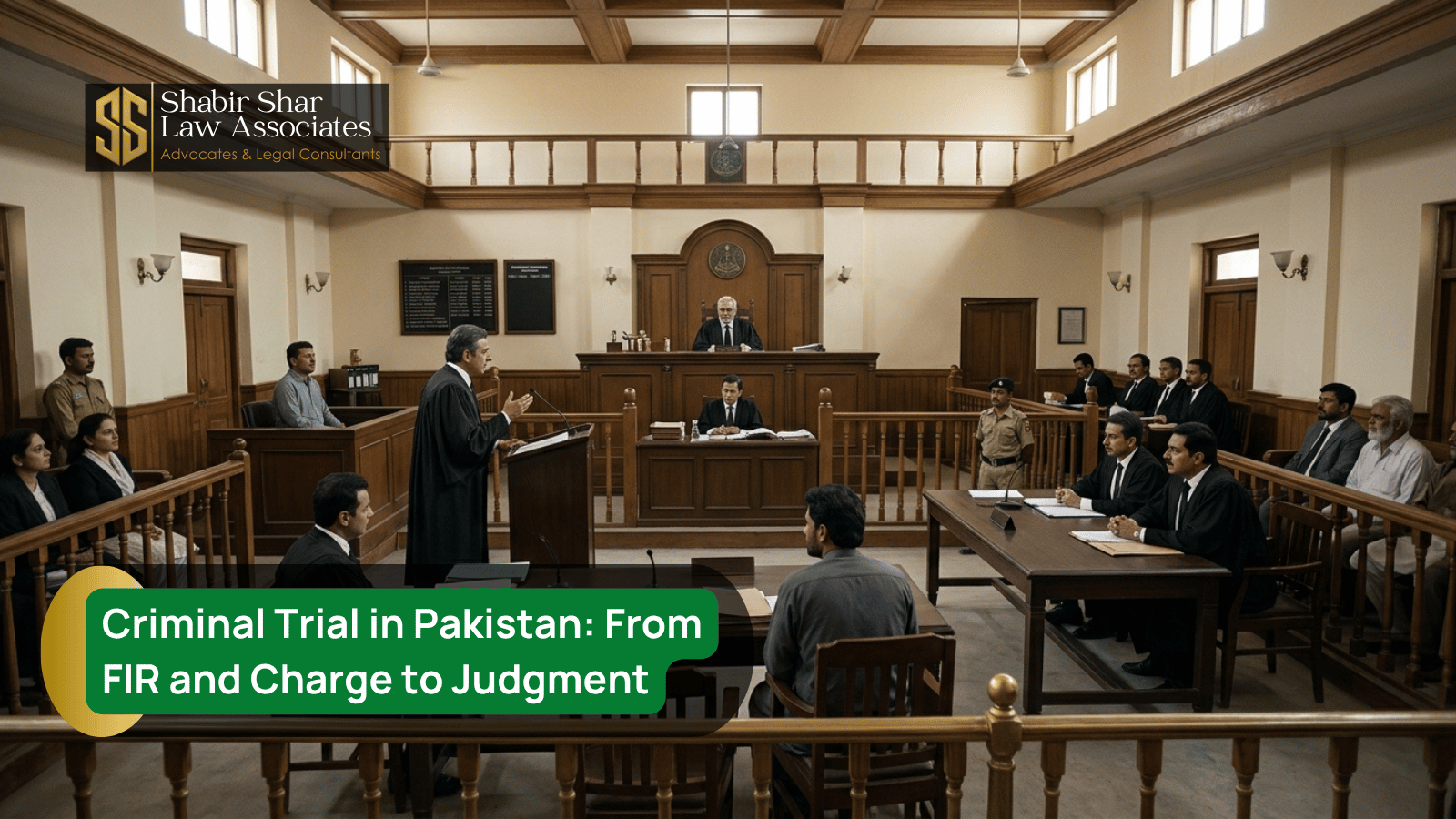
If the matter proceeds to trial, the accusation is formally put to the accused in accordance with the procedure applicable to the forum. The prosecution carries the burden required by criminal law and must rely on legally admissible material. Witness testimony may be examined and challenged, while documentary, medical, forensic or other evidence can be produced where relevant.
The exact evidentiary sequence varies by forum and offence. A useful legal strategy therefore starts with the actual case record rather than assuming that every prosecution will follow an identical factual pattern.
Stage 4: Cross-Examination, Defence and the Accused's Position
A fair criminal process includes a meaningful opportunity to know and answer the case being advanced. Cross-examination can test reliability, consistency and the basis of witness testimony. The accused is dealt with under the applicable procedural provisions and may produce defence evidence where legally appropriate.
The defence strategy should respond to the prosecution record. It may involve questions of identification, role, documentary inconsistency, medical or forensic material, delay, motive, admissibility or other issues that genuinely arise from the evidence. None of these points should be asserted merely because they are common defence themes.
Stage 5: Final Arguments and Judgment
After the evidence and procedural stages are complete, the court evaluates the record and hears the parties in the manner required by law. The judgment determines the case at that forum. A conviction, acquittal or other final order should be read together with the evidence and reasons recorded by the court.
Stage 6: Appeal, Revision or Other Post-Judgment Remedy
Depending on the statute, court and order, an appeal, revision or another remedy may be available. The correct forum and limitation period cannot safely be determined from a generic article; the judgment and applicable law must be reviewed promptly.
Practical Preparation for a Criminal Trial
Clients should preserve the FIR, challan or police report where available, witness-related material, medical or forensic documents, prior court orders, bail orders, identification documents and other records relevant to the allegations. A clear chronology can also help counsel compare the prosecution version with the underlying documents.
Where a dispute begins before trial with an FIR issue, our FIR registration service may be relevant. Where liberty is the immediate concern, see our before-arrest bail and post-arrest bail services.
Criminal Trial Representation in Karachi
For proceedings in Karachi, correct forum identification, hearing dates, custody status and the current evidentiary stage need to be confirmed from the case record. The underlying national and provincial legal framework still controls; Karachi relevance should come from the real forum and client circumstances, not from repeating a city name throughout the article.
Official Legal References
Readers can consult the Code of Criminal Procedure, 1898 and the Constitution of the Islamic Republic of Pakistan through Pakistan Code. A live case may also involve special legislation and current judgments that require separate review.
Frequently Asked Questions
Does every criminal case go directly to the Sessions Court?
No. Jurisdiction depends on the offence and applicable law. Matters may fall before different criminal courts or a special court created by statute.
What does Article 10A protect?
Article 10A protects the right to fair trial and due process in the determination of a criminal charge, as well as civil rights and obligations.
Is an FIR proof that the accused committed the offence?
No. An FIR initiates the criminal process; the prosecution case must still be investigated and, where the matter proceeds to trial, proved through the legal process.
Can evidence be challenged during trial?
Yes. The applicable procedure allows the opposing party to test prosecution evidence, including through cross-examination and legal objections where appropriate.
Can a criminal judgment be challenged?
Depending on the order, statute and forum, an appeal, revision or another remedy may be available. The judgment should be reviewed promptly to identify the correct route and limitation period.
The firm publishes this guide as general legal information and identifies the legal framework and sources used where practical. A displayed review date is a content-review date; this page does not claim review by a named advocate unless that attribution is expressly shown. Matter-specific advice requires review of the current law, facts and documents.