Family Court Procedure in Pakistan: Filing, Reconciliation, Evidence and Decree
A practical Family Court procedure guide covering filing, response, pre-trial reconciliation, evidence, judgment and preparation for family cases in Pakistan.
What Types of Cases Go to a Family Court?
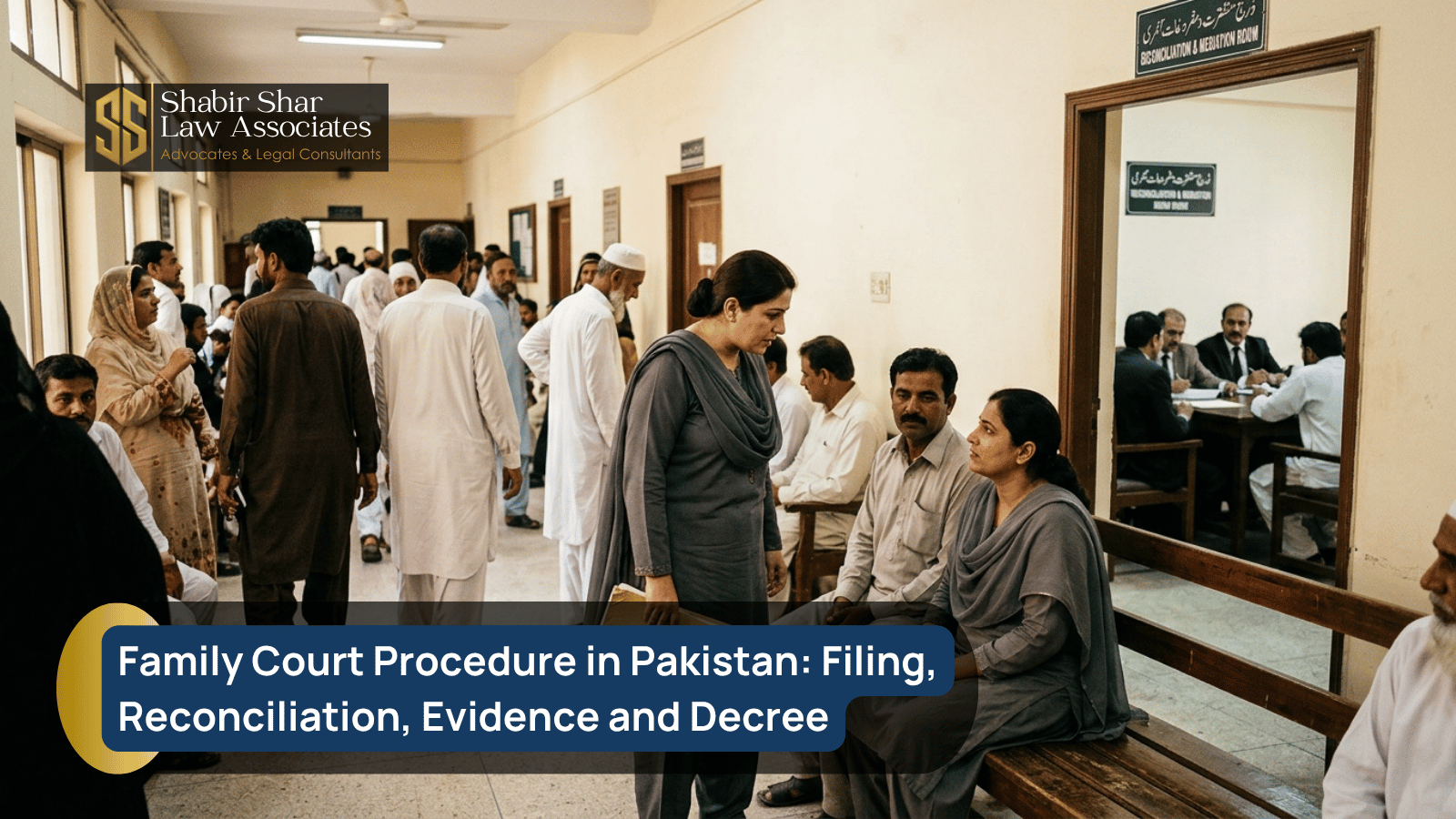
The Family Courts Act, 1964 creates a specialized procedure for the family matters listed in its Schedule. These include dissolution of marriage, dower, maintenance, restitution of conjugal rights, custody of children and guardianship, among other listed matters.
The official statutory text is available through Pakistan Code. The correct forum and territorial jurisdiction still depend on the claim and applicable rules; merely describing a dispute as a “family matter” does not answer every jurisdictional question.
Stage 1: Filing the Plaint and Supporting Record
A Family Court case begins with the claim being properly presented to the competent court. The plaint should identify the parties, material facts, legal basis and relief sought, together with documents and other material required by the applicable procedure.
Good preparation starts before filing. Nikahnama, identity documents, birth records, previous orders, payment records, correspondence and documents relating to children or property may be relevant depending on the relief claimed.
Stage 2: Written Statement and the Other Side's Position
After service, the defendant has an opportunity to place the defence before the court in accordance with the Family Courts Act and applicable rules. Missing a procedural deadline or failing to preserve documents can create avoidable difficulty, so the actual summons and court order should be read carefully.
Family Court procedure is specialized. Section 17 of the Act limits the ordinary application of the Code of Civil Procedure and Qanun-e-Shahadat except as expressly provided, which is one reason general civil-suit templates should not be copied into a family case without checking the governing procedure.
Stage 3: Pre-Trial Hearing and Reconciliation
The Act provides for a pre-trial stage at which the court examines the pleadings and may hear the parties or counsel. Reconciliation or compromise is an express part of the statutory framework.
In dissolution matters, the effect of failed reconciliation depends on the type of claim and applicable law. For a dedicated explanation of judicial dissolution, see our khula procedure guide. For a husband's talaq notice process, see divorce and talaq procedure in Pakistan.
Stage 4: Evidence
If the case requires evidence, parties need to prove the facts material to the relief sought. The relevant witnesses and documents depend on the dispute. A custody case may focus on the child's welfare and care arrangements; a maintenance case may require evidence of needs and resources; a dower or marital-status dispute may turn on the Nikahnama and other records.
Do not assume that a large bundle of documents is automatically persuasive. Evidence should be organized around the issues the court actually needs to decide.
Stage 5: Final Reconciliation Effort, Judgment and Decree
The Family Courts Act also provides for another effort at compromise or reconciliation after the evidence stage. If settlement is not possible, the court proceeds to judgment and decree.
Appeal or post-decree remedies are not identical for every type of family order. Before calculating a deadline or choosing a remedy, confirm whether an appeal lies, what the impugned order actually decides and when it was communicated.
How the Procedure Connects to the Firm's Family Services
The same procedural framework can contain very different substantive disputes. Shabir Shar & Associates maintains separate service pages for divorce, separation, khula, maintenance, child custody and guardianship. Keeping those commercial pages separate reduces confusion between the legal service being sought and this general procedural guide.
Practical Checklist Before a Hearing
- Know the exact relief requested in the pleadings.
- Carry the current court order and note the purpose of the next hearing.
- Organize original and copy documents relevant to that stage.
- Keep a chronology of important dates, payments, notices and previous proceedings.
- Inform counsel about any new development that may affect settlement, custody, maintenance or marital status.
Frequently Asked Questions
Does the ordinary Civil Procedure Code apply in full to Family Courts?
No. The Family Courts Act creates a specialized procedure and expressly limits application of the Code of Civil Procedure and ordinary evidence law except where the Act provides otherwise.
Is reconciliation part of Family Court procedure?
Yes. The statutory scheme includes reconciliation or compromise efforts at specified stages, although settlement is not guaranteed.
Does every family case require the same evidence?
No. Evidence should match the actual relief and disputed facts, such as maintenance, custody, dower or dissolution.
Can a Family Court case involve several connected claims?
Family matters can be connected, but pleading and procedural treatment depend on the relief sought and applicable law. The case should be structured from the actual facts rather than a generic template.
Are all Family Court judgments appealed in the same way?
No. Appealability and deadlines depend on the type of order and governing law. The specific order should be reviewed before selecting a remedy.
This guide is written for general information and reviewed against the legal framework identified in the article. Laws, procedures and facts can change; confirm the current position before relying on information for a live matter.

Muhammad Saleem
Founder, Made by Saleem | Web Systems, SEO & Digital Growth SpecialistMuhammad Saleem is the founder of Made by Saleem and a web systems, SEO and digital growth specialist with 7+ years of practical experience. His work spans custom websites, Laravel and Filament platforms, CRM and client portals, ecommerce, business automation, SEO and digital marketing, with 50+ projects managed across multiple industries.
View author profile