Divorce and Talaq Procedure in Pakistan: Notice, Union Council and Legal Steps
A practical guide to divorce and talaq procedure in Pakistan, including Union Council notice, reconciliation, effectiveness of talaq and important records to preserve.
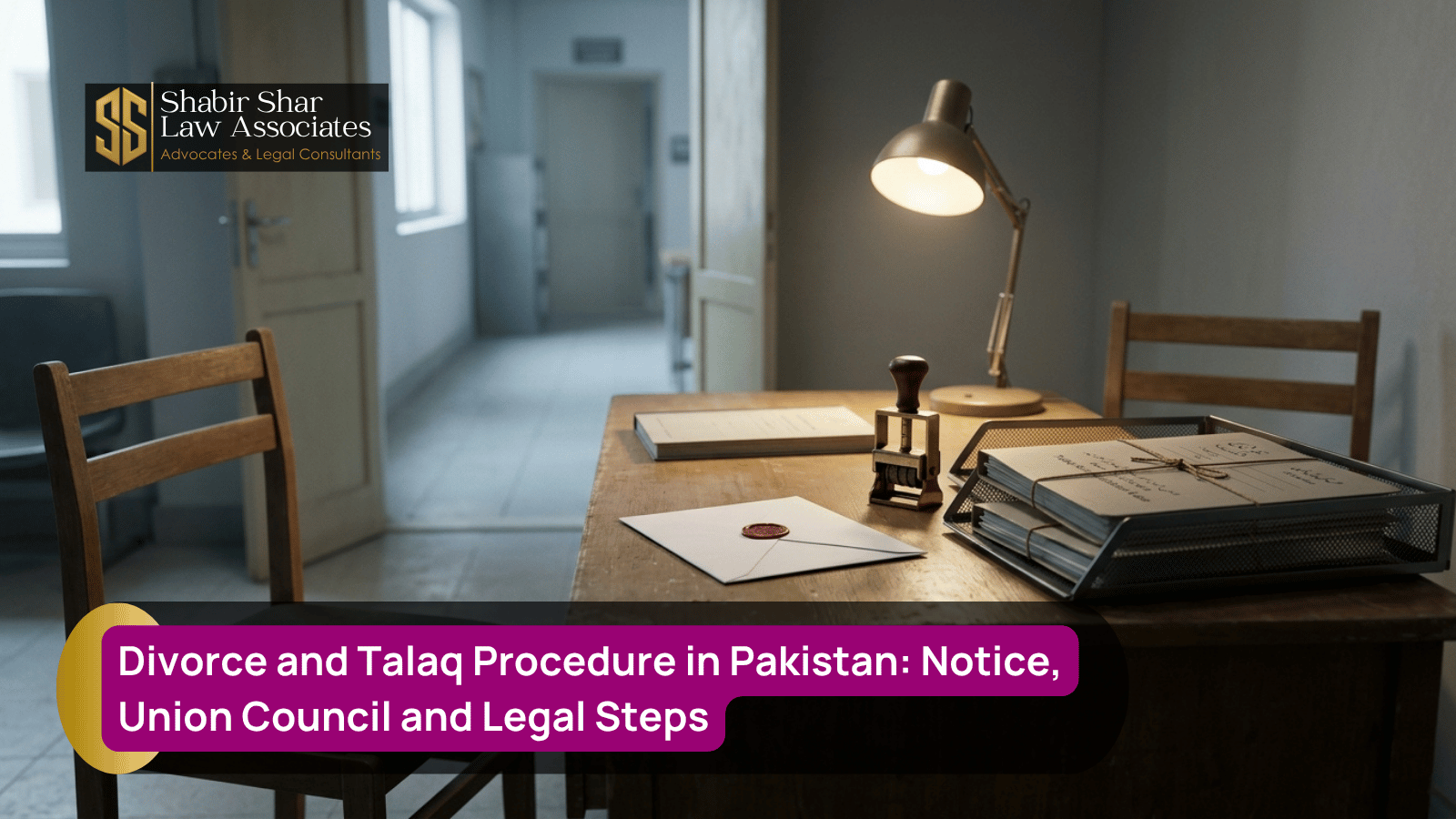
Divorce, Talaq and Separation Are Not Always the Same Legal Route
People often use the words divorce, talaq, separation and khula interchangeably, but the legal route depends on who is seeking dissolution, the applicable personal law and the form of marital termination involved. For Muslim marriages, the Muslim Family Laws Ordinance, 1961 contains important procedural rules concerning talaq.
This article explains the general statutory process. It does not determine whether a particular pronouncement, notice or marital-status claim is legally effective in an individual case.
Written Notice After Pronouncement of Talaq
Section 7 of the Muslim Family Laws Ordinance provides that a husband who wishes to divorce his wife must, as soon as may be after pronouncement of talaq, give written notice to the Chairman and supply a copy to the wife. The notice requirement is therefore a legal step separate from simply saying or writing that the marriage is over.
Where the parties belong to Fiqah-e-Jafria, the current statutory text contains additional provisions concerning pronouncement and personal-law treatment. Those provisions should be reviewed directly where they apply rather than assuming one identical rule for every Muslim marriage.
When Does Talaq Become Effective?
Under section 7, and subject to the statutory exceptions, talaq does not become effective until ninety days have expired from the date on which the notice is delivered to the Chairman, unless it is revoked earlier. The law also addresses pregnancy: where the wife is pregnant at the time of pronouncement, effectiveness is tied to the later of the statutory ninety-day period or the end of the pregnancy.
This is why the date of pronouncement, date of notice, proof of delivery and subsequent Union Council record can all matter when marital status is later questioned.
Reconciliation Through the Arbitration Council
The Chairman is required by section 7 to constitute an Arbitration Council within thirty days of receipt of the notice for the purpose of attempting reconciliation. The process is not the same thing as a Family Court khula suit, and the existence of reconciliation proceedings should not be confused with a guaranteed reunion or a court judgment.
The rules under the Muslim Family Laws Ordinance also address territorial jurisdiction and notice-related procedure. Correct local jurisdiction should be checked from the parties' actual circumstances instead of selecting an office only because it is convenient.
Talaq, Khula and Judicial Dissolution
Khula is a judicial route through the Family Court and is not the same process as a husband's talaq notice under section 7. Our separate guide explains khula procedure in Pakistan. Other forms of dissolution may involve delegated divorce rights, the Dissolution of Muslim Marriages Act, personal-law questions or other facts requiring separate analysis.
For service-specific assistance, review the firm's divorce service in Karachi, separation service and khula service.
Documents and Records to Preserve
- Nikahnama and marriage-registration records.
- CNIC copies and correct current addresses of the parties.
- Copy of the written talaq notice and proof of submission or delivery.
- Union Council or Arbitration Council correspondence.
- Any certificate or official record later issued concerning dissolution.
- Existing Family Court orders relating to maintenance, custody, dower or other connected claims.
Preserving a reliable timeline can be important where a later dispute concerns marital status, remarriage, maintenance, inheritance or documentation.
Divorce Procedure for Karachi Matters
For parties connected with Karachi, the statutory framework remains the same, but the correct Union Council or other competent authority depends on the jurisdictional rules and the facts concerning residence. Avoid relying on an unverified office address or informal verbal assurance where legal status depends on the record.
If a connected dispute must proceed before a Family Court, our Family Court procedure guide explains the general litigation stages.
Frequently Asked Questions
Is saying talaq once enough to complete the legal process?
The statutory procedure includes written notice to the Chairman and a copy to the wife. Legal effectiveness should be assessed from the applicable law, dates and record rather than from the pronouncement alone.
Does talaq become effective immediately after the notice is filed?
Section 7 generally provides a ninety-day period from delivery of notice to the Chairman, subject to revocation and the special pregnancy provision.
Is khula the same as talaq?
No. Khula is ordinarily pursued through the Family Court as judicial dissolution, while section 7 talaq follows a different statutory notice process.
Can maintenance or child-custody issues continue after marital dissolution?
Yes. Marital status and financial or child-related claims are distinct legal questions. The relevant rights and orders depend on the facts and applicable law.
Which Union Council should receive the notice?
Jurisdiction depends on the applicable rules and residence-related facts. The correct authority should be confirmed before relying on a filing.
This guide is written for general information and reviewed against the legal framework identified in the article. Laws, procedures and facts can change; confirm the current position before relying on information for a live matter.

Muhammad Saleem
Founder, Made by Saleem | Web Systems, SEO & Digital Growth SpecialistMuhammad Saleem is the founder of Made by Saleem and a web systems, SEO and digital growth specialist with 7+ years of practical experience. His work spans custom websites, Laravel and Filament platforms, CRM and client portals, ecommerce, business automation, SEO and digital marketing, with 50+ projects managed across multiple industries.
View author profile