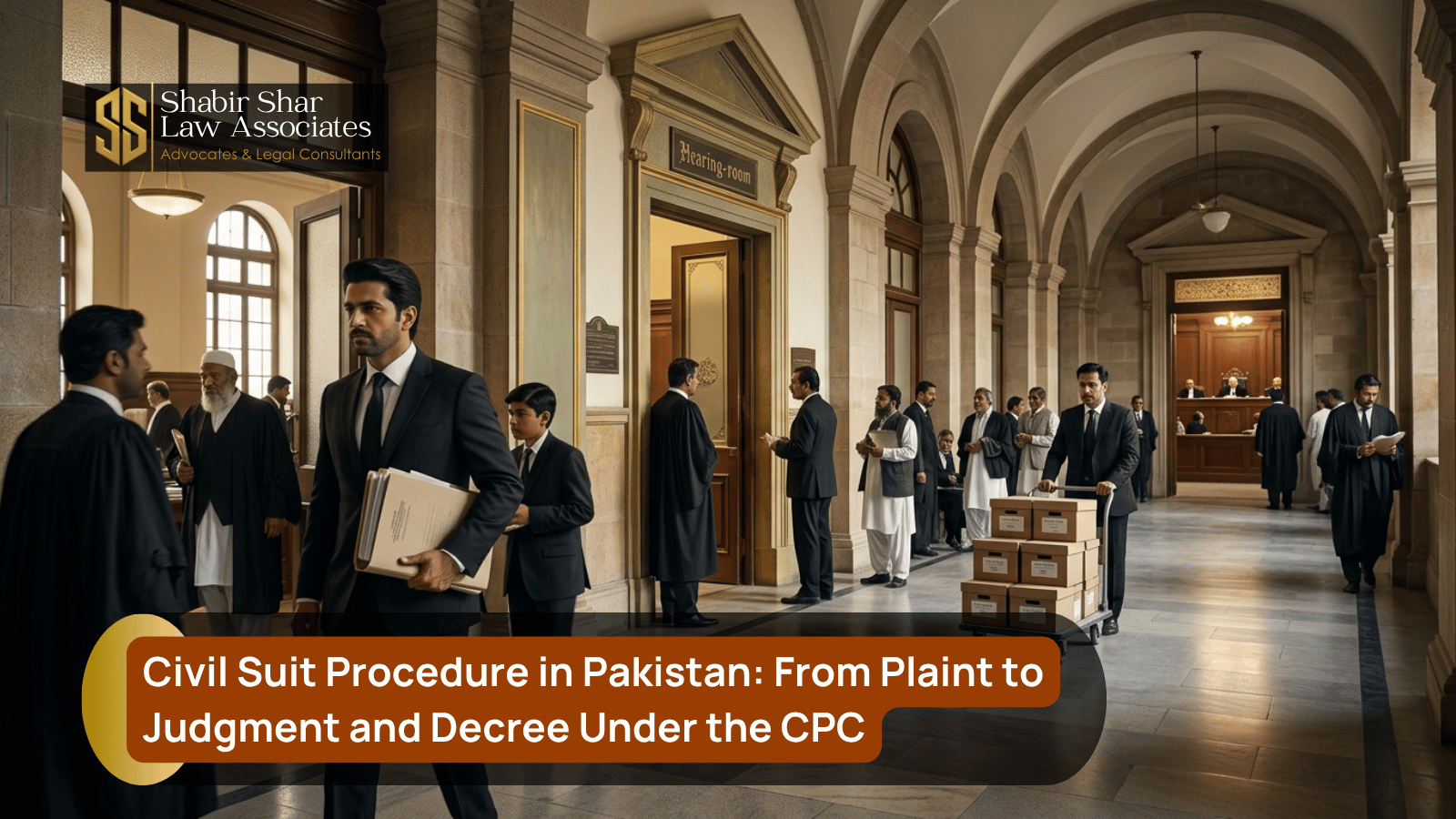
Civil Suit Procedure in Pakistan: From Plaint to Judgment and Decree Under the CPC
A step-by-step overview of civil suit procedure in Pakistan under the Code of Civil Procedure, including pleadings, issues, evidence, judgment, decree and execution.
What Does the Code of Civil Procedure Govern?
The Code of Civil Procedure, 1908 (CPC) provides the procedural framework for civil courts in Pakistan. It deals with matters such as institution of suits, jurisdiction, service, pleadings, written statements, issues, evidence-related procedure, interim applications, judgments, decrees, execution and appeals. The current federal compilation also states objectives including fair handling of cases, saving time and expense and encouraging alternate dispute resolution where appropriate.
A civil suit is not merely a form to be filed. The relief, parties, court, valuation, cause of action, limitation and supporting documents should be considered before the plaint is presented.
Step 1: Identify the Right Court and Cause of Action
Before drafting, determine what legal right has been infringed, what relief is legally available and which court has territorial and pecuniary jurisdiction. A property dispute, contract claim, declaration, injunction or damages action may require different pleadings and valuation.
Limitation should be checked at the beginning, not after the suit is prepared. The Limitation Act and any special statute can affect the time available to bring a claim.
Step 2: Prepare and File the Plaint
The plaint sets out the material facts on which the plaintiff relies, the cause of action, jurisdictional basis and relief sought. Documents relied on should be identified and filed according to the applicable procedural rules. Pleadings should state material facts clearly without turning the plaint into an unstructured evidence bundle.
For Karachi civil disputes, see our civil suit service in Karachi and Civil Litigation practice area.
Step 3: Summons and the Defendant's Written Statement
After institution and court processing, the defendant is served and given an opportunity to respond. Order VIII of the CPC addresses the written statement and requires the defence to deal specifically with the plaintiff's allegations and raise relevant grounds such as limitation, payment, release, fraud or other matters that would otherwise take the opposite party by surprise.
Service problems can delay proceedings, so accurate addresses and appropriate service steps are important from the outset.
Step 4: Issues Define the Questions for Decision
Order XIV addresses framing of issues. Issues arise from material propositions of fact or law affirmed by one party and denied by the other. They help define what the court actually needs to decide and what evidence is relevant.
A party should understand the framed issues before leading evidence because an impressive volume of documents does not help if it does not prove the propositions that matter.
Step 5: Evidence and Cross-Examination
The parties then prove their respective cases through admissible documentary and oral evidence in accordance with the applicable law and procedure. Documents should be authentic, relevant and properly connected to the pleaded case. Witness preparation should focus on truthful knowledge of facts rather than rehearsed conclusions.
Step 6: Arguments, Judgment and Decree
After evidence is completed, the court hears arguments and decides the issues. Order XX deals with judgment and decree. The judgment explains the court's decision, while the decree formally expresses the adjudication for enforcement and appellate purposes.
The official Code of Civil Procedure, 1908 is available through Pakistan Code.
Step 7: Execution or Appeal
Winning a decree and obtaining actual compliance are separate stages. If the judgment-debtor does not comply voluntarily, execution proceedings may be necessary under the CPC. Depending on the decision and statutory framework, an aggrieved party may also have a right of appeal, review or revision. Deadlines should be checked immediately after judgment.
Interim Relief During a Civil Suit
Some disputes require protection before final judgment. Order XXXIX of the CPC addresses temporary injunctions and interlocutory orders, including cases where disputed property is at risk of waste, damage or alienation and cases involving threatened breach or injury. Interim relief is discretionary and depends on the legal and factual circumstances.
For disputes requiring a final declaration and injunction, see our guide to declaration and permanent injunction in Pakistan.
Frequently Asked Questions
Does every civil dispute require a full trial?
No. Some matters may resolve through admissions, settlement, alternate dispute resolution, preliminary legal issues or other procedural outcomes. The route depends on the case.
What is the difference between a judgment and a decree?
The judgment contains the court's reasons and decision; the decree formally expresses the adjudication in the manner required by civil procedure.
Why are issues important?
Issues define the material questions of fact and law that the court must decide and help focus evidence and arguments.
Can interim relief be sought before the final decision?
Yes, where the legal requirements are met. Temporary injunctions and other interlocutory orders are governed by the CPC and are not automatic.
What should be checked before filing a civil suit in Karachi?
Review cause of action, limitation, parties, territorial and pecuniary jurisdiction, valuation, documents, available remedies and whether urgent interim relief is needed.
This guide is written for general information and reviewed against the legal framework identified in the article. Laws, procedures and facts can change; confirm the current position before relying on information for a live matter.

Muhammad Saleem
Founder, Made by Saleem | Web Systems, SEO & Digital Growth SpecialistMuhammad Saleem is the founder of Made by Saleem and a web systems, SEO and digital growth specialist with 7+ years of practical experience. His work spans custom websites, Laravel and Filament platforms, CRM and client portals, ecommerce, business automation, SEO and digital marketing, with 50+ projects managed across multiple industries.
View author profile